




:max_bytes(150000):strip_icc()/GettyImages-928550046-60a39e36ac004bfb86d894b26d6f2a0b.jpg)




















Why Modern Businesses Need a Digital POS in 2026
Discover why modern businesses need a digital POS in 2026. Improve inventory control, forecasting, and decision-making with real-time data.

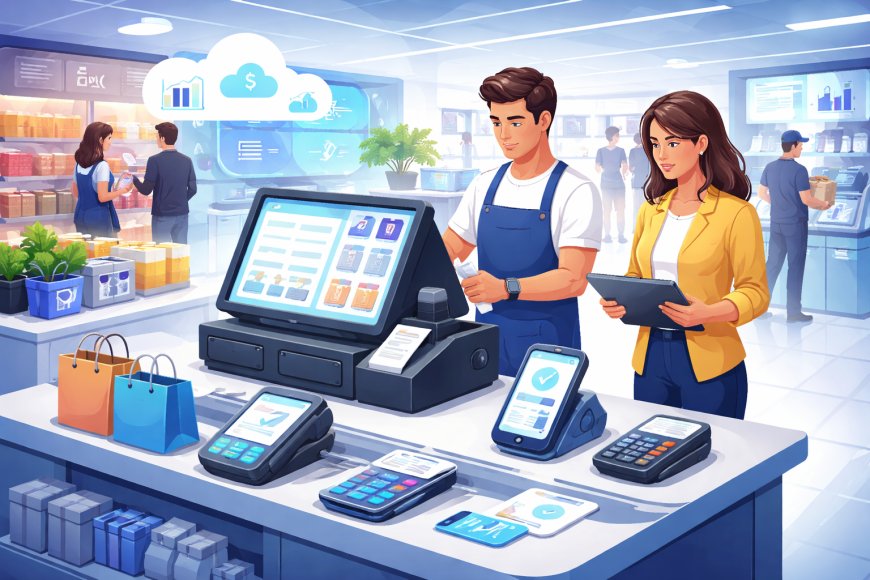
By 2026, a digital POS is no longer just a cash register. It has become the operational hub of a business: sales, inventory, branches, staff activity, and financial reporting all flow through it. OECD, McKinsey, and the World Bank all point in the same direction: digitalization helps smaller businesses and retailers improve efficiency, expand reach, and make better data-driven decisions. McKinsey also notes that retail is being reshaped by e-commerce, omnichannel behavior, changing customer expectations, and increasing supply chain complexity, while companies with strong digital capabilities tend to outperform.
One of the strongest reasons to adopt a digital POS is inventory control. McKinsey highlights the value of connected inventory, which provides greater stock visibility across the supply chain and helps retailers fulfill customer needs more reliably. MIT research adds a critical warning: even a small level of inventory information inaccuracy can disrupt replenishment and create severe stockouts, and revenue losses from stockouts can be greater than the stock losses themselves.
A digital POS also improves forecasting and purchasing decisions. In a ScienceDirect study, real-time POS data improved demand forecasting accuracy by an average of 11.2% compared with order-history-based forecasting. Another study found that combining POS data with retailer order history can outperform single-source methods by up to 125% in certain cases. In practical terms, daily transaction data is not just a sales record; it is the raw material for smarter forecasting.
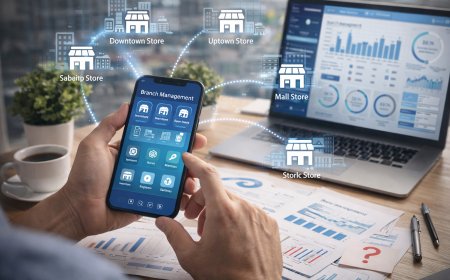
For businesses with multiple branches or teams, a digital POS gives something modern businesses value most: visibility. OECD says digital transformation can help small retailers broaden their customer base and improve operational efficiency, including through customer data management systems. That matters because many growing businesses do not fail from lack of demand; they fail because the owner loses clear visibility into daily operations.
Digital POS systems are also increasingly important for cash flow and financing. The World Bank explains that digitization and automation make financing processes more efficient and lower costs, while alternative data from digital business processes can improve credit risk assessment. In other words, a well-structured digital system does more than streamline operations; it also makes the business more legible to financial institutions.
That is why modern businesses in 2026 need a POS that is not only fast at checkout, but also powerful in management. The right POS should support real-time reports, user control, branch control, expense tracking, and profit-and-loss visibility without manual rework. This is where a solution like KORPIE becomes highly relevant: one-time payment, unlimited users, unlimited branches, an owner app, booking features for service businesses, real-time profit and loss reporting, lifetime warranty, and custom development options for separate fees. It is more than a POS; it is an operational foundation designed to grow with the business.
Kalau kamu mau, saya bisa lanjutkan dan ubah ini menjadi versi artikel blog SEO yang lebih panjang dan lebih “jualan”, lengkap dengan judul H1, meta description, serta CTA untuk KORPIE.
What's Your Reaction?