














Coffee Waste Could Become Future Biofuel, Researchers Say
A new study suggests that spent coffee grounds could be converted into biofuel and other valuable products, offering a sustainable solution for coffee waste.

:max_bytes(150000):strip_icc()/GettyImages-928550046-60a39e36ac004bfb86d894b26d6f2a0b.jpg)
Coffee is consumed daily by millions of people around the world. While the beverage itself is widely enjoyed, the brewing process produces large quantities of spent coffee grounds, which are often discarded as waste.
However, scientists are now discovering that this waste may hold significant value. A recent study titled “Multivalorization of Spent Coffee Grounds Towards a Waste-Free Solution” explores how coffee residues can be converted into renewable energy and other useful products.
The research highlights the potential of coffee waste as an alternative resource that could support sustainable production systems.
Coffee Waste and Environmental Challenges
The global popularity of coffee means that enormous amounts of coffee grounds are produced every day. After brewing, these residues are usually thrown away and sent to landfills.
When organic waste accumulates in landfills, it can contribute to environmental issues such as methane emissions and increased waste management challenges.
Because of these concerns, researchers are increasingly interested in finding ways to reuse coffee by-products instead of discarding them.
Turning Coffee Grounds Into Biofuel
One of the most promising applications discussed in the study is the production of biofuel from coffee waste.
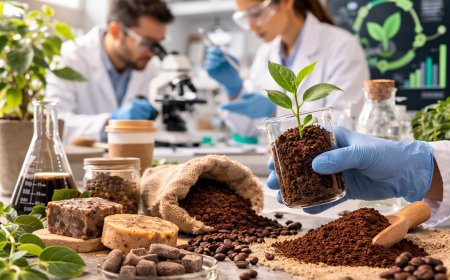
Spent coffee grounds contain natural oils that can be extracted and processed into biodiesel. This renewable fuel could serve as an alternative energy source and reduce reliance on fossil fuels.
The use of coffee waste for biofuel production also offers a way to reduce the environmental impact of the growing coffee industry.
Additional Uses for Coffee Residues
Besides energy production, the research highlights several other potential applications for spent coffee grounds.
Organic Fertilizers
Coffee residues can be processed into organic fertilizers, helping improve soil fertility and support sustainable agriculture.
Eco-Friendly Materials
Researchers are also exploring the possibility of incorporating coffee waste into biodegradable materials and sustainable products, which could reduce the use of synthetic materials.
Industrial Applications
Compounds found in coffee grounds may also be useful in cosmetic formulations and other industrial processes, thanks to their natural antioxidant content.
A Step Toward Sustainable Resource Management
The study introduces the concept of multivalorization, which focuses on extracting multiple valuable products from a single waste material.
By applying this approach to coffee waste, industries could maximize resource efficiency while minimizing environmental impact.
Instead of being treated as waste, spent coffee grounds could become a valuable raw material for energy production, agriculture, and industrial applications.
Supporting the Circular Economy
Researchers believe that innovative solutions like these could help support a circular economy, where materials are reused and recycled rather than discarded.
As coffee consumption continues to grow worldwide, finding sustainable uses for coffee waste will become increasingly important.
Transforming coffee residues into biofuel and other valuable products may represent an important step toward creating a more sustainable coffee industry.
What's Your Reaction?