





:max_bytes(150000):strip_icc()/GettyImages-928550046-60a39e36ac004bfb86d894b26d6f2a0b.jpg)




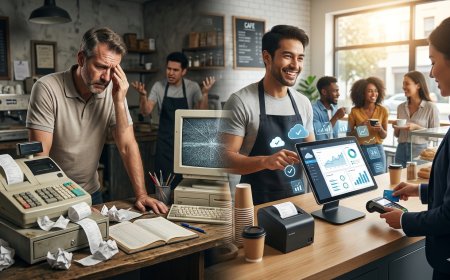
















Cloud POS vs Offline POS — Which Is Better?
Cloud POS vs Offline POS is not about technology preference—it’s about control, resilience, and decision speed. Cloud POS enables real-time visibility, centralized management, and scalable growth, while offline POS ensures business continuity during connectivity disruptions. For CEOs of UMKM/SMEs, the optimal strategy is often a cloud-based POS with offline fallback—combining data-driven control with operational resilience.

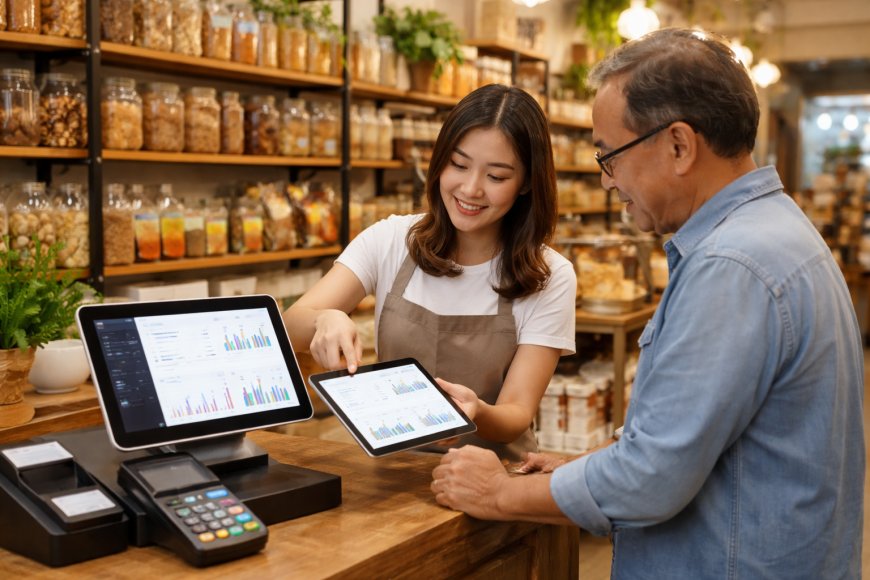
For UMKM/SMEs, the real question is not “which system is newer,” but “which system gives the business better control, resilience, and speed of decision-making.” OECD and World Bank research both point in the same direction: digitalization helps SMEs improve efficiency, access new markets, and strengthen competitiveness. In practice, a POS system is one of the fastest ways to turn daily transactions into usable business data.
A cloud POS stores data in the cloud and is designed for real-time access, remote management, and easier scaling. Oracle and Square describe cloud POS as useful for real-time reporting, inventory visibility, remote access, lower upfront cost, and automatic updates. For a CEO, that means one dashboard for sales, stock, and performance across locations, without waiting for end-of-day manual reports.
An offline POS is built to keep selling when the internet is unstable or unavailable. Shopify says its POS can still support certain offline sales workflows, while Square’s offline mode lets merchants accept cash and, in some setups, offline card payments during outages. Toast also documents offline mode as a resilience feature when internet or cloud connectivity is lost. The trade-off is that offline systems have operational limits, and some actions or payment confirmations may not be available until the connection returns.
So which is better? For most growing UMKM, cloud POS is the stronger long-term choice because it gives management visibility, faster reporting, better inventory control, and easier expansion. Square explicitly highlights real-time insights, streamlined inventory management, remote access, lower upfront costs, and automatic updates as cloud POS advantages. That matters especially for owners who want to manage the business, not just operate the cashier.
But offline POS still has a role. If a business operates in areas with weak connectivity, frequent outages, or intermittent network access, offline capability becomes a risk-control feature, not a luxury. In that case, the smartest setup is often a cloud POS with offline fallback, because it combines central control with business continuity. That conclusion is an inference drawn from the documented strengths of cloud systems and the outage-resilience features of offline mode.
For Indonesia, this matters at scale. Government sources say UMKM account for nearly all business units and absorb around 97% of the workforce, which means even small improvements in POS adoption can have a large economic impact. In CEO terms: POS is not just an operational tool, it is a visibility layer that supports growth, discipline, and scalability.
Bottom line
If the business is scaling, multi-branch, data-driven, and wants clean control, cloud POS is usually better. If the business is in a high-risk connectivity environment, offline capability is essential. For many UMKM, the best answer is not pure cloud or pure offline, but a cloud POS with offline backup.
What's Your Reaction?