




:max_bytes(150000):strip_icc()/GettyImages-928550046-60a39e36ac004bfb86d894b26d6f2a0b.jpg)




















How to Manage Your Business More Efficiently with a POS System
A POS system is no longer just a transaction tool—it is a strategic platform for driving efficiency, accuracy, and growth. By automating operations, enabling real-time decision-making, optimizing inventory, and centralizing business control, POS empowers CEOs to scale with discipline and data. For UMKM/SMEs, it is one of the fastest ways to transform operations from manual to intelligent systems.

In today’s competitive environment, efficiency is not about working harder—it is about building systems that reduce friction, errors, and delays. Research consistently shows that Point of Sale (POS) systems are one of the most practical tools to improve operational efficiency in SMEs/UMKM. A study published in the Journal of Business Technology Research found that businesses using modern POS systems reported up to 30% improvement in operational efficiency.
For CEOs and business owners, the question is no longer whether to use POS, but how to leverage it strategically.
1. Turn Transactions into Real-Time Decisions
A modern POS system captures every transaction and converts it into structured data—sales trends, peak hours, product performance, and customer behavior.
This matters because data-driven decisions outperform intuition. POS systems provide real-time reports that allow leaders to:
- Identify best-selling products
- Detect underperforming items
- Adjust pricing and promotions quickly
According to industry research, POS systems deliver “valuable insights into sales patterns,” enabling better strategic decisions.
???? CEO takeaway: You move from reactive management to proactive decision-making.
2. Automate Operations and Reduce Human Error
Manual processes slow businesses down and introduce risk. POS systems automate key workflows such as:
- Billing and pricing
- Tax calculations
- Inventory updates
- Financial reporting
Automation can reduce data-entry errors by up to 80%, freeing time and resources.
Additionally, integrated POS systems eliminate duplicate work across departments, streamlining operations and improving productivity.
???? CEO takeaway: Efficiency is not about speed alone—it is about consistency and accuracy at scale.
3. Optimize Inventory and Cash Flow
Inventory mismanagement is one of the biggest hidden costs in SMEs. A POS system provides:
- Real-time stock visibility
- Automated low-stock alerts
- Demand forecasting based on sales data
This reduces overstocking, prevents stockouts, and improves cash flow. Real-time inventory tracking also helps businesses align purchasing with actual demand.
???? CEO takeaway: Better inventory = better cash discipline and higher margins.
4. Improve Customer Experience (and Retention)
Efficiency is not only internal—it directly impacts customer satisfaction.
POS systems enable:
- Faster checkout processes
- Multiple payment options
- Personalized service using customer data
Faster service reduces waiting time and increases throughput, especially during peak hours.
This is critical because poor customer experience drives churn—research shows many customers switch brands after bad experiences.
???? CEO takeaway: Operational efficiency translates directly into revenue growth.
5. Centralize Multi-Store and Team Management
As businesses scale, complexity increases. POS systems provide a centralized platform to:
- Monitor multiple branches
- Track employee performance
- Standardize pricing and operations
This ensures consistency across locations and enables better control over expansion.
???? CEO takeaway: POS is the operational backbone for scaling a business.
6. Build a Data Asset for Long-Term Growth
Every transaction recorded in a POS system builds a valuable database:
- Customer behavior
- Product performance
- Sales trends over time
This data becomes a strategic asset for:
- Forecasting
- Marketing optimization
- Business valuation
???? CEO takeaway: POS is not just a tool—it is a long-term data infrastructure.
Final Thoughts
A POS system is no longer just a cashier tool. It is a management system that connects sales, inventory, customers, and data into one unified platform.
For CEOs, the real value lies in this shift:
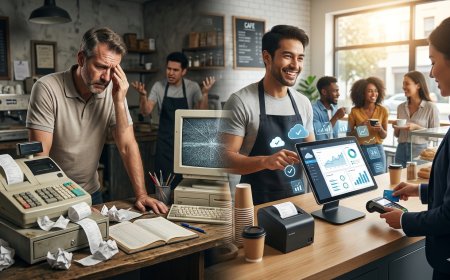
- From manual → automated
- From guesswork → data-driven
- From fragmented → integrated operations
Bottom line:
If implemented correctly, a POS system does not just improve efficiency—it fundamentally changes how a business operates, competes, and scales.
What's Your Reaction?