




:max_bytes(150000):strip_icc()/GettyImages-928550046-60a39e36ac004bfb86d894b26d6f2a0b.jpg)





















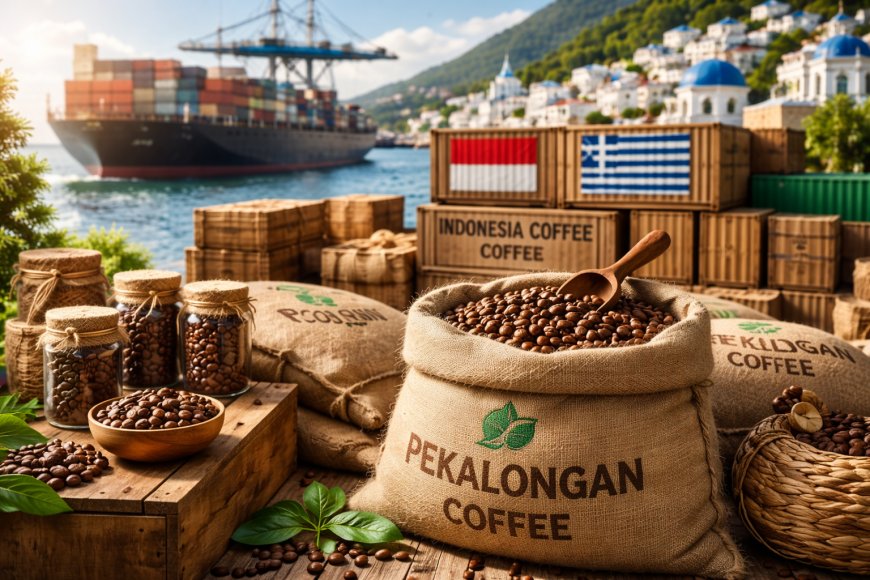
First Export of 2026: Pekalongan Coffee Enters the Greek Market
The first coffee export shipment of 2026 from Pekalongan Regency marks another milestone for local farmers, as robusta coffee from the region continues to gain recognition in international markets such as Greece.

First Export of 2026: Pekalongan Coffee Enters the Greek Market
Kajen — The government of Pekalongan Regency has recorded another positive achievement in the plantation sector. A total of 19 tons of robusta coffee produced in Pekalongan were exported to Greece during the region’s first export release event of 2026.
The export ceremony took place at the courtyard of the Department of Cooperatives, SMEs, and Manpower of Pekalongan Regency on Monday (March 9, 2026).
The shipment was officially released by Anis Rosidi, Assistant for Economic and Development Affairs of the Regional Secretariat, who attended on behalf of the Acting Regent of Pekalongan.
Growing International Demand
In his remarks, Anis Rosidi explained that the export shipment represents a continuation of Pekalongan coffee exports to Greece that have already taken place several times before.
“This is the fifth export of Pekalongan coffee to Greece, and at the same time the first export shipment in 2026, totaling around 19 tons. This shows that Pekalongan coffee has significant market opportunities abroad,” he said.
He added that based on information from the exporting company, demand for Pekalongan coffee in the Greek market remains strong. In fact, another export shipment is planned for May, potentially with a larger volume.
“The market demand is actually still very open. However, we are currently continuing to increase our production capacity so that we can meet that demand,” he explained.
A Long History of Coffee Cultivation
According to Anis, coffee is one of the plantation commodities with a long history in Pekalongan Regency. Coffee cultivation in the area began hundreds of years ago and continues to be developed by local farmers.
The success of this export, he added, is the result of strong collaboration among multiple stakeholders, including local government institutions, business actors, and supporting organizations.
One of the institutions involved in mentoring small businesses is Bank Indonesia, which provides guidance to small and medium enterprises in areas such as product quality improvement, packaging, and marketing strategies.
Institutional Support for Export Activities
Support from government institutions has also played a key role in facilitating the export process.
Among them are the Directorate General of Customs and Excise of Indonesia and the Indonesian Quarantine Agency, both of which help ensure that export shipments meet administrative requirements and international product quality standards.
Expanding Coffee Production
Looking ahead, the Pekalongan Regency Government plans to further develop the coffee sector through plantation intensification and expansion programs to increase local production.
Currently, much of Pekalongan’s coffee production still comes from forest areas. The government aims to encourage more structured and wider cultivation efforts to support the sustainable growth of the region’s coffee industry.
“In the future, we want to promote broader and more organized development so that Pekalongan coffee can continue to grow and compete in the global market,” Anis concluded.
Strengthening Regional Competitiveness
This export shipment is expected to become an important momentum for improving the competitiveness of Pekalongan’s flagship agricultural products.
What's Your Reaction?